
As the real estate sector is a significant source of greenhouse gas emissions, Mercialys has set itself ambitious targets to combat climate change. By obtaining validation of its carbon trajectory from the Science Based Targets initiative (SBTi) as early as 2019, supported by a dedicated action plan, the Company committed to contributing to the objective of limiting the increase in average global temperatures to well below 2°C compared with pre-industrial levels, notably by significantly outperforming the targets established at the time of certification.
Building on these achievements, Mercialys has defined a new and highly ambitious greenhouse gas emissions reduction strategy, once again validated by the SBTi under its latest sector-specific “Buildings” standard. Mercialys’ climate strategy is now structured around four new targets for 2030 and 2050, supported by a new transition plan currently being finalized.
Near-Term Targets (2017-2030)
Net-Zero Targets (2017-2050)
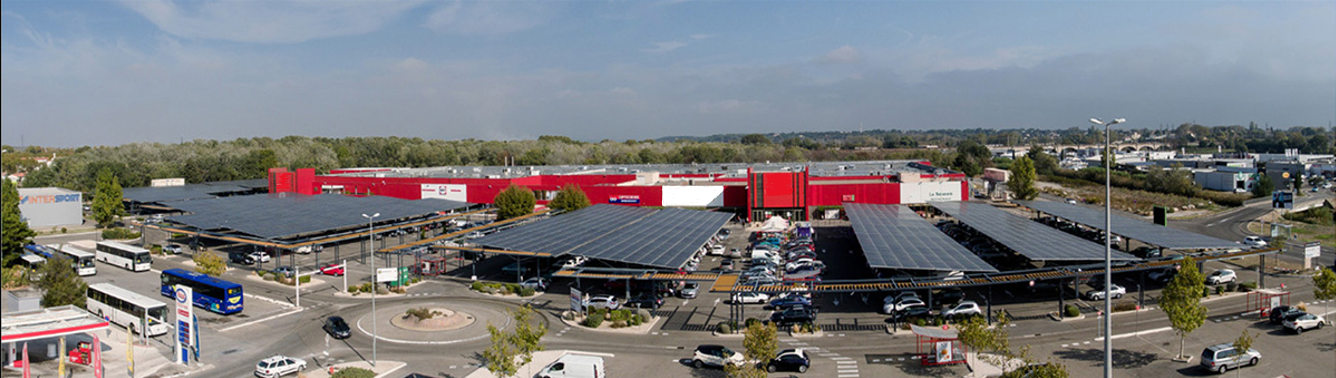
Developing renewable energies: Mercialys is taking action to support the development of renewable energies by setting up solar plants on its center rooftops and in their parking areas, in addition to sourcing renewable French electricity supplies.
Optimizing energy consumption: by installing more energy-efficient equipment and replacing legacy systems, such as LEDs for lighting, Mercialys has continuously reduced its energy consumption levels since 2015. Alongside this, to reduce requirements for artificial lighting, Mercialys encourages natural lighting by setting up light wells when renovating its centers. These measures are making it possible to improve its centers’ energy efficiency.
Working with its tenants and providers: aware that combating climate change is beyond its direct scope of responsibility, Mercialys engages its stakeholders in its approach by raising their awareness and cooperating with them to reduce their carbon footprint.
reduction in energy consumption per sq.m. between 2017 and 2025
reduction in carbon emissions per sq.m., between 2018 and 2025, Scopes 1, 2 and 3


